
The Longevity Evidence Library
Science-based interventions for cellular optimization and metabolic health.
1. Mitochondrial Optimization
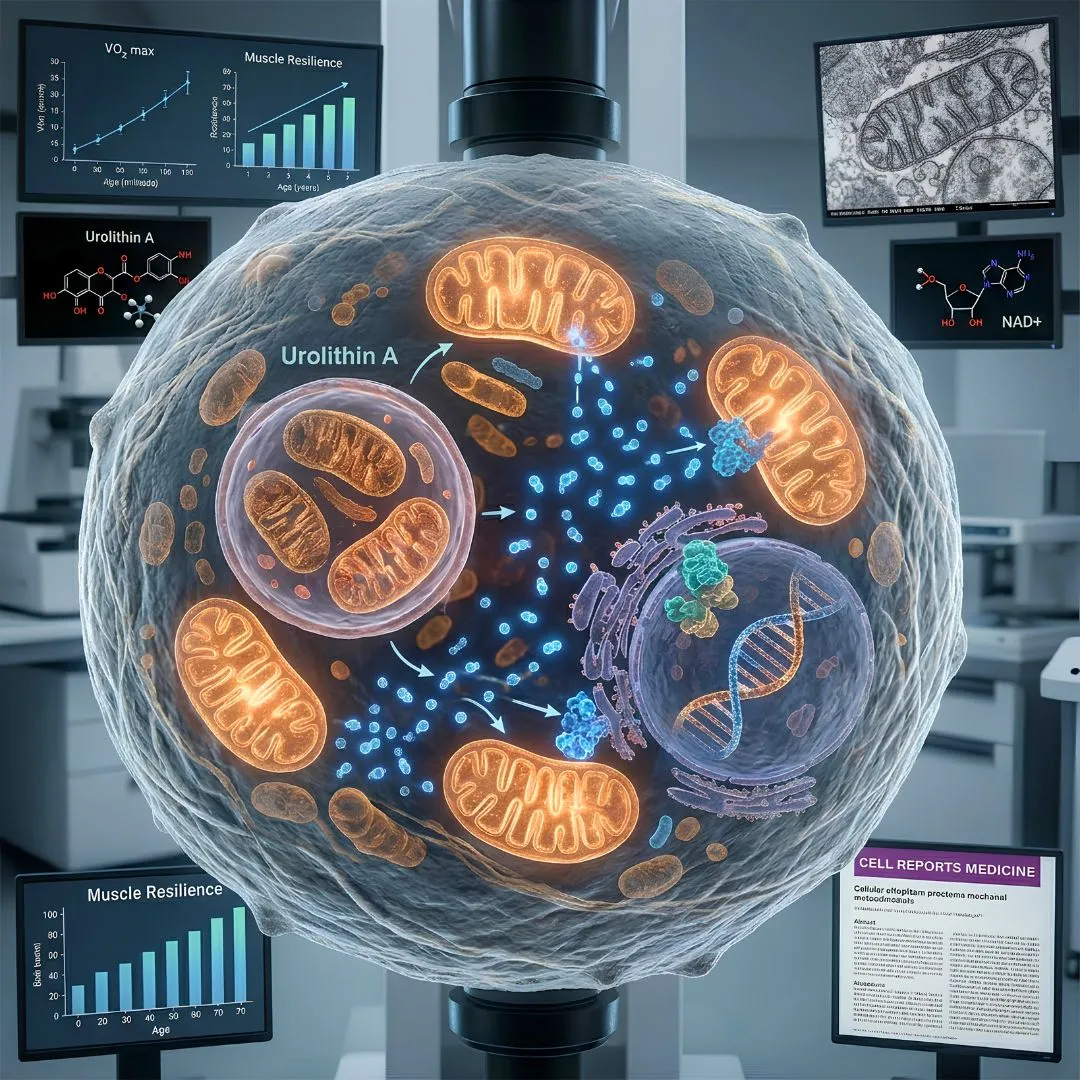
The Science: Mitochondria degrade with age; we target them to restore cellular energy and muscle resilience.
Key Intervention: Urolithin A & NAD+
| Study | Summary | Video |
|---|---|---|
|
Urolithin A in Humans: Safe, and Moving the Right Markers The Mitophagy Activator Urolithin A Is Safe and Induces a Molecular Signature of Improved Mitochondrial and Cellular Health in Humans. Nature Metabolism, 2019 Read the study → |
As we age, our cells get slower at clearing out worn-out mitochondria. Urolithin A, made by gut bacteria from pomegranates, berries, and walnuts, may help restart that cleanup. In this first human trial, older adults took it for four weeks. It was safe and shifted mitochondrial markers, but the trial measured biomarkers, not strength or energy, and was industry-sponsored. |
► Watch Angie's explanation |
|
Urolithin A and Muscle Strength: One Gain, One Miss Urolithin A Improves Muscle Strength, Exercise Performance, and Biomarkers of Mitochondrial Health in a Randomized Trial in Middle-Aged Adults. Cell Reports Medicine, 2022 Read the study → |
Did urolithin A actually make people stronger? Eighty-eight inactive, overweight adults aged 40 to 64 took it or a placebo for four months. Hamstring strength rose about 12% at the lower dose, aerobic capacity just missed significance, and the main outcome, peak power, didn't change. The manufacturer sponsored the trial: a reason to measure first, not to buy. |
► Watch Angie's explanation |
|
NAD+: Why the Real Question Is What's Draining It NAD+ Metabolism and Its Roles in Cellular Processes During Ageing. Nature Reviews Molecular Cell Biology, 2021 Read the study → |
NAD+ is marketed as an anti-aging molecule, but the human evidence is still thin. This review explains that NAD+ fuels enzymes involved in DNA repair and metabolism, and that levels fall with age. Chronic inflammation raises CD38, an enzyme that burns through NAD+. So the better question isn't just how to add more, but why it's draining. |
► Watch Angie's explanation |
2. Regenerative Medicine & Structural Integrity
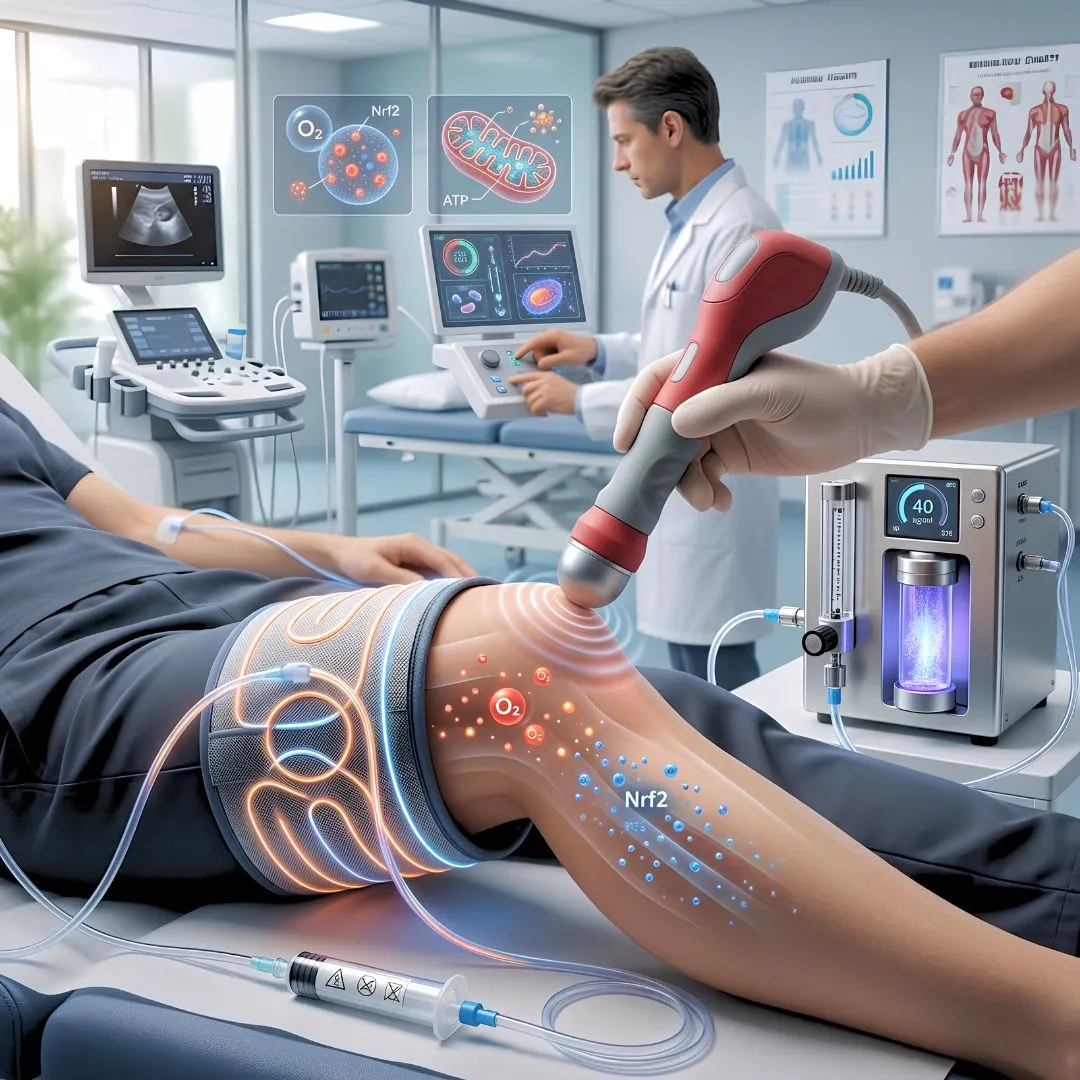
The Science: Activating internal repair signaling, improving oxygenation, and using physical stimuli to trigger recovery.
Key Interventions: Ozone Therapy, PEMF (Bemer), Shockwave, & Compression
| Study | Summary | Video |
|---|---|---|
|
Ozone Therapy: A Mechanism Worth Understanding, Not a Promise Ozone therapy mechanisms in tissue repair and fibroblast migration. PMC Read the study → |
Ozone therapy is one of medicine's most debated topics, so this skips the debate and looks at what the research measured. This study explored how ozone affects tissue repair and the movement of repair cells, in mice and cells, not people. The FDA has held since 1976 that ozone gas has no known medical use. A mechanism, not a promise. |
► Watch Angie's explanation |
|
Shockwave and the Stalled Tendon Biological Response of Extracorporeal Shock Wave Therapy to Tendinopathy In Vivo (Review). Frontiers in Veterinary Science, 2022 Read the study → |
Chronic tendon pain often isn't inflammation. It's a repair process that stalled. This review pulls together decades of shockwave research in animals and people. Human success rates ran 65% to 91% depending on the tendon, and treated animal tendons grew more new blood vessels. Most of the mechanism data comes from animal and cell studies, so it's not a guarantee. |
► Watch Angie's explanation |
|
The NASA PEMF Paper, Actually Read Physiological and Molecular Genetic Effects of Time-Varying Electromagnetic Fields on Human Neuronal Cells. NASA Technical Publication, 2003 Read the study → |
Nearly every PEMF mat mentions NASA, but few sellers have read the paper. NASA researchers exposed human neural cells to a pulsed electromagnetic field and saw changes in growth and in genes tied to repair. But this was cells in a dish, not a knee, a back, or a person. The signal reaches cells; what it does for pain is unproven. |
► Watch Angie's explanation |
|
Not Everybody Is a Candidate Platelet Rich Plasma Therapy in Achilles and Patellar Tendinopathies: Outcomes in Subjects with Diabetes. Journal of Clinical Medicine, 2024 (plus three supporting studies, see Part 2) Read the study → |
Regenerative injections send a repair signal, and some bodies can't act on it. Research points to clear predictors of a poor response: high blood sugar, low vitamin D, nicotine, and prior steroid injections in the same joint. That's why preparing the body first, by checking labs and addressing these factors, is part of the treatment, not a hurdle before it. |
► Watch Angie's explanation |
|
"PRP" Is Not One Thing: Platelet Dose and Outcome The Effect of Platelet Dose on Outcomes after Platelet Rich Plasma Injections for Musculoskeletal Conditions. Current Reviews in Musculoskeletal Medicine, 2024 Read the study → |
Two clinics can both offer PRP and deliver completely different products. This research compared knee arthritis outcomes with the total number of platelets actually delivered, and outcomes tended to be better at higher doses. So the real question isn't "Do you offer PRP?" It's "What's in it, how much, and is my body ready to use it?" |
► Watch Angie's explanation |
|
The Trial Most Clinics Won't Show You Effect of Intra-articular Platelet-Rich Plasma vs Placebo Injection on Pain and Medial Tibial Cartilage Volume in Patients With Knee Osteoarthritis (RESTORE). JAMA, 2021 Read the study → |
In 288 adults with knee arthritis, PRP injections did no better than saltwater on pain or cartilage after 12 months. But no one was screened for blood sugar, inflammation, or nicotine. Angie's reading: an injection given to an unscreened group performs about like saline. That's the case for labs before a syringe, and sometimes an honest no. |
► Watch Angie's explanation |
3. Regenerative Cell Signaling
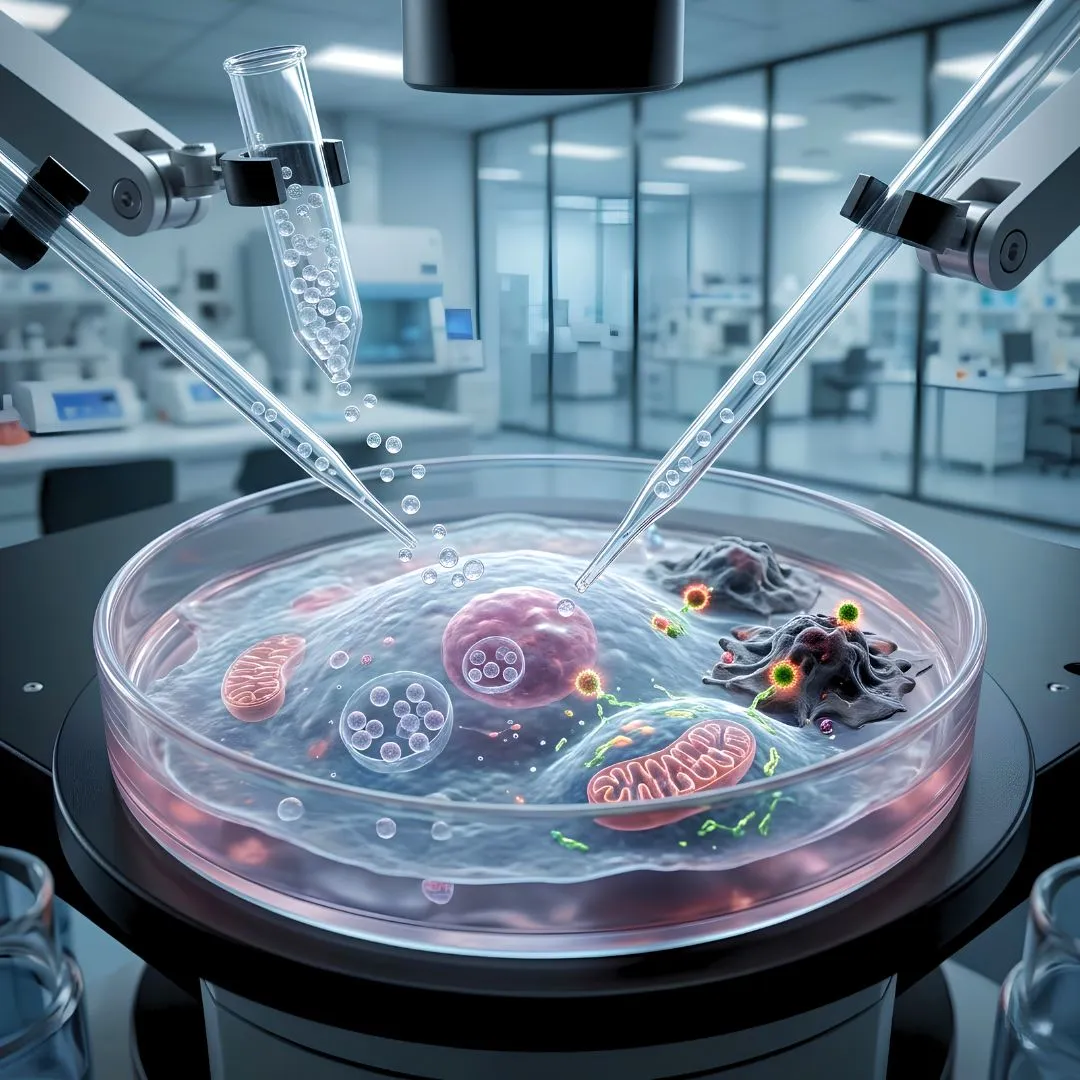
The Science: Utilizing messenger vesicles (exosomes) to coordinate repair and “clean up” senescent (zombie) cells.
Key Intervention: Exosomes & Senolytics
| Study | Summary | Video |
|---|---|---|
|
Exosomes: The Signal, Not the Cell Therapeutic Efficacy and Promise of Human Umbilical Cord Mesenchymal Stem Cell-Derived Extracellular Vesicles in Aging and Age-Related Disorders. International Journal of Molecular Sciences, 2025 Read the study → |
Stem cells don't mainly work by becoming new tissue. This review of cell and animal research shows that tiny vesicles, called exosomes, dock with cells and hand over repair instructions. In older mice, they lowered aging markers and improved bone. This is mice and cells, not people, and exosome products aren't FDA-approved to treat any disease. |
► Watch Angie's explanation |
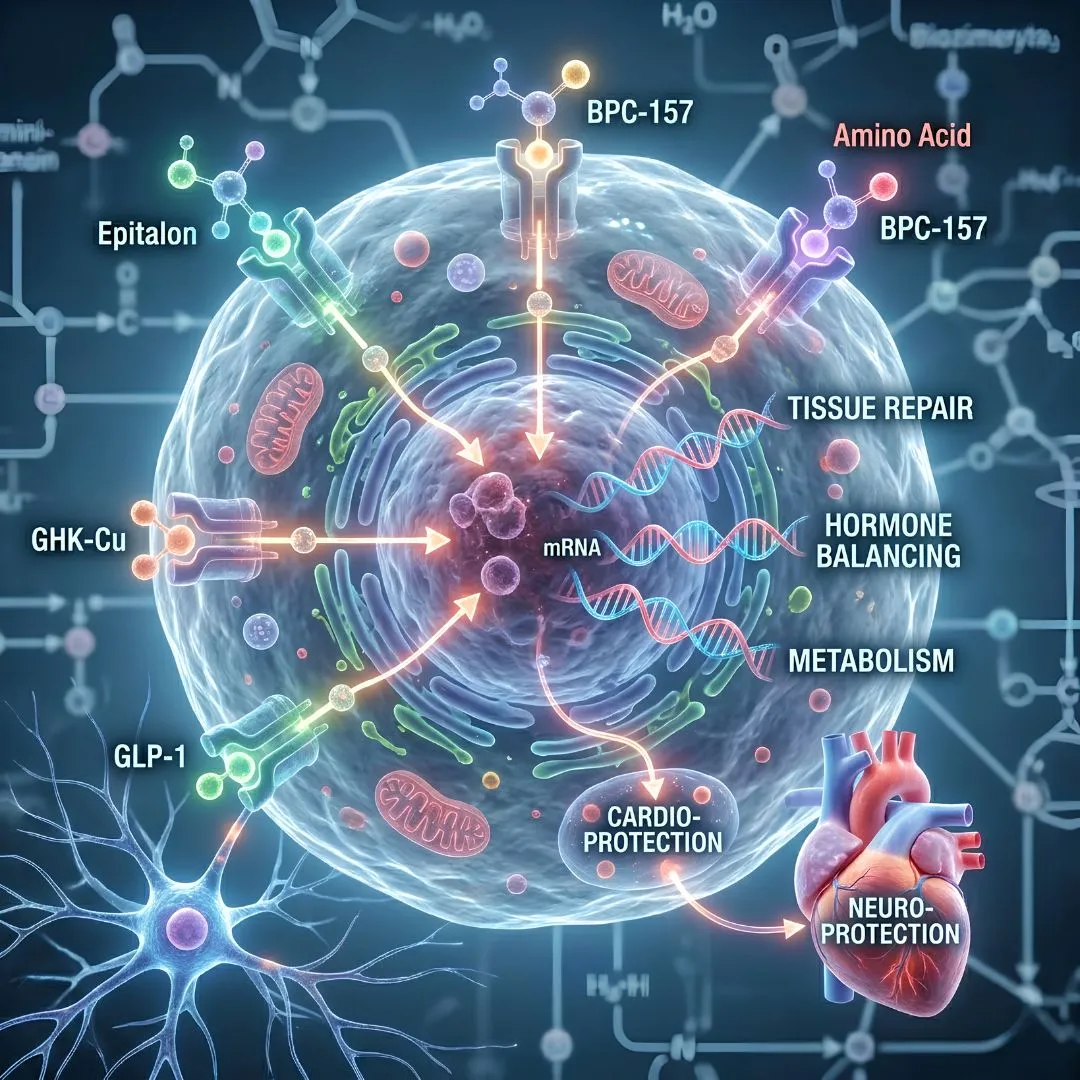
4. Precision Peptide Signaling
The Science: Using short-chain amino acids to “unlock” repair pathways for tissue, hormones, and metabolism.
Key Interventions: BPC-157, Epitalon, GHK-Cu, GLP-1 Agonists
| Study | Summary | Video |
|---|---|---|
|
Peptides: What the Research Actually Says Review of nine therapeutic peptides in healthy aging (Mavrych, Shypilova & Bolgova). Frontiers in Aging, 2026 Read the study → |
Peptides are sold online as "anti-aging in a vial," but this review of nine peptides is more measured. Only two are FDA-approved, both backed by large trials. The rest rely mostly on animal work and small pilot studies, and long-term safety data in older adults is nearly absent. The biology is real, but a mechanism isn't a result. |
► Watch Angie's explanation |
|
GLP-1s and the Heart: The SELECT Trial Semaglutide and Cardiovascular Outcomes in Obesity without Diabetes. New England Journal of Medicine, 2023 Read the study → |
One of the most important GLP-1 trials was about the heart, not weight. In 17,604 adults with heart disease and excess weight but no diabetes, heart attack, stroke, and cardiovascular death were 20% lower on the drug. The benefit appeared before most weight came off, pointing to inflammation and blood vessel health as part of the story. |
► Watch Angie's explanation |
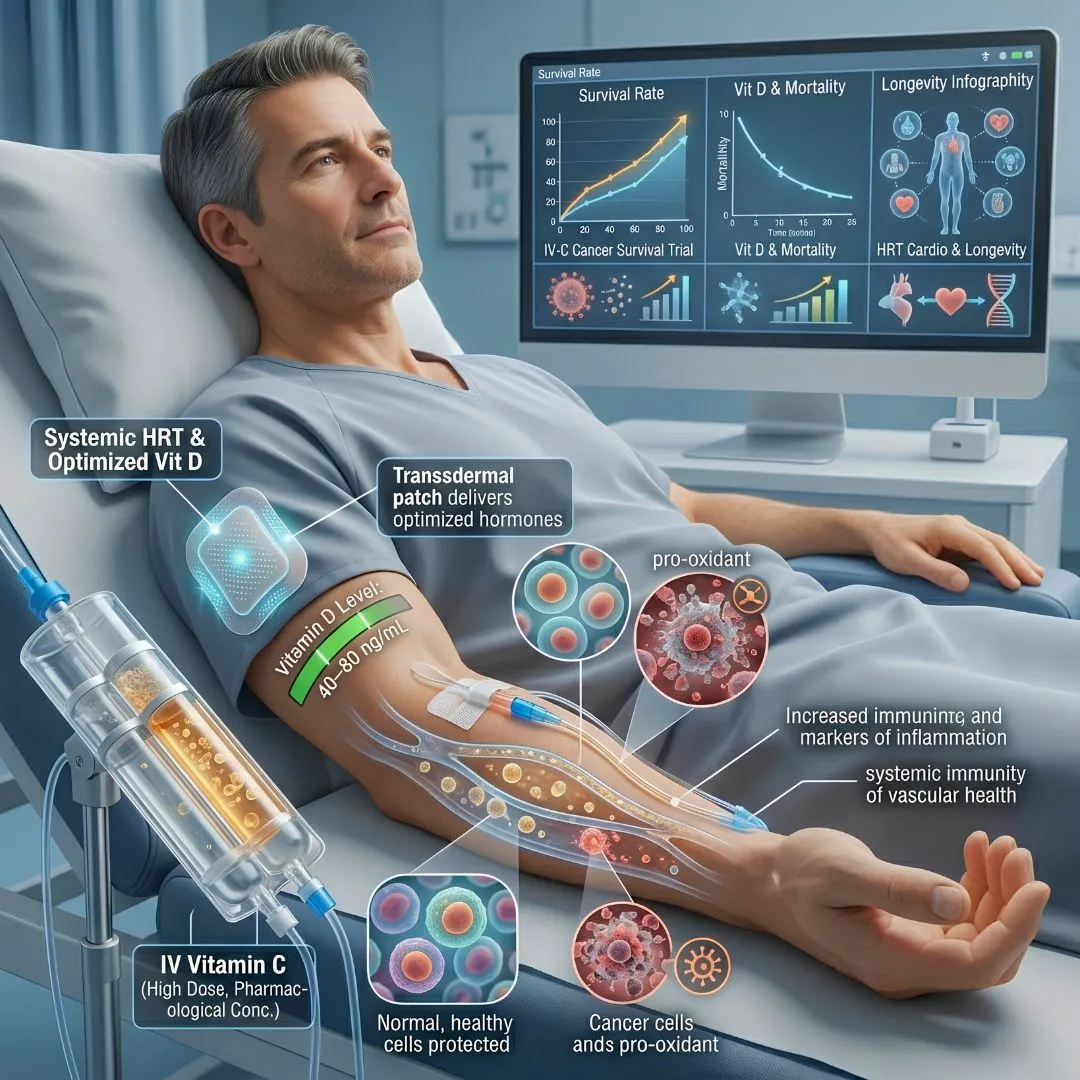
5. Metabolic & Systemic Optimization
The Science: Optimizing the internal environment via precise nutrient and hormonal levels.
Key Interventions: High-Dose IV Vitamin C, Vitamin D, & HRT
| Study | Summary | Video |
|---|---|---|
|
High-Dose IV Vitamin C: The Whole Story A Randomized Trial of Pharmacological Ascorbate, Gemcitabine, and Nab-Paclitaxel for Metastatic Pancreatic Cancer. Redox Biology, 2024 Read about the study → |
Headlines said vitamin C doubled cancer survival. In 34 people with stage 4 pancreatic cancer, adding high-dose IV vitamin C to chemotherapy raised median survival from 8.3 to 16 months. But it was a small phase 2 trial in one cancer, given alongside chemotherapy, not instead of it. It's groundwork for a larger trial, not a reason to skip oncology care. |
► Watch Angie's explanation |
|
Vitamin D and Cancer: The Association and the Trials Vitamin D's Impact on Cancer Incidence and Mortality: A Systematic Review. Nutrients, 2025 Read the study → |
Low vitamin D keeps showing up alongside worse cancer outcomes. But trials of vitamin D supplements didn't lower how many people got cancer. They did lower cancer deaths by about 13%, mostly with daily dosing. That fits slowing a cancer more than preventing it. Know your level, remember that normal isn't optimal, and retest after changes. |
► Watch Angie's explanation |
|
Hormone Therapy: Timing Is the Story Hormone Therapy for Preventing Cardiovascular Disease in Post-Menopausal Women. Cochrane Database of Systematic Reviews, 2015 Read about the study → |
A 2002 headline scared many women away from hormone therapy. This review of 19 trials and 40,410 women found timing matters: starting within 10 years of menopause meant about 30% lower mortality and less heart disease, while starting later brought little benefit and higher stroke risk. Clot risk rose in both groups, so decide based on labs and history. |
► Watch Angie's explanation |
|
A Normal TSH Doesn't Guarantee Normal Thyroid Hormones Levothyroxine Monotherapy Cannot Guarantee Euthyroidism in All Athyreotic Patients. PLOS ONE, 2011 Read the study → |
In 1,811 people without a thyroid gland, all on levothyroxine with a normal TSH, free T3 ran lower and free T4 higher than in healthy controls. About one in five fell outside the healthy range. T4 is the storage form and T3 the active one. If TSH is the only lab checked, a conversion problem stays invisible, so it may be worth asking for free T3. |
► Watch Angie's explanation |
|
Gut Bacteria and Insulin Resistance Human Gut Microbes Impact Host Serum Metabolome and Insulin Sensitivity. Nature, 2016 Read the study → |
Insulin resistance may not start only in the pancreas and liver. In 277 Danish adults, those with lower insulin sensitivity had gut bacteria that overproduced branched-chain amino acids, which built up in the blood. One of these species worsened insulin resistance in mice. It's a mechanism, not a protocol, but when fasting insulin climbs on a clean diet, look at the gut. |
► Watch Angie's explanation |
|
Inflammation and Heart Events: The CANTOS Trial Antiinflammatory Therapy with Canakinumab for Atherosclerotic Disease. New England Journal of Medicine, 2017 Read the study → |
Many heart attacks happen with normal cholesterol. In 10,061 heart attack survivors with high inflammation, an anti-inflammatory drug lowered cardiovascular events without changing cholesterol. The benefit was small, overall deaths didn't drop, fatal infections rose, and the drug isn't approved for this use. Still, it shows inflammation is part of heart disease. Do you know your hs-CRP? |
► Watch Angie's explanation |
|
Creatine and the Night-Shift Brain Single Dose Creatine Improves Cognitive Performance and Induces Changes in Cerebral High Energy Phosphates During Sleep Deprivation. Scientific Reports, 2024 Read the study → |
At 4 a.m. on a night shift, the brain runs short on energy, not willpower. In 15 sleep-deprived adults, a single high dose of creatine kept the brain's energy reserve steady and improved memory and processing speed compared with placebo. One night, one very high trial dose, a small group: it covers a gap the night shift creates. It's not a protocol. |
► Watch Angie's explanation |
|
The Sauna Trial That Ran at 60 Degrees Waon Therapy for Managing Chronic Heart Failure: Results From a Multicenter Prospective Randomized WAON-CHF Study. Circulation Journal, 2016 Read the study → |
This trial used a gentle 60°C (140°F) dry sauna, not a hot Finnish one. In 149 hospitalized heart failure patients, daily 15-minute sessions improved walking distance and heart function measures, but the main blood marker missed significance between groups. Patients were under cardiology supervision. Talk to your cardiologist before using a sauna if you have a heart condition. |
► Watch Angie's explanation |
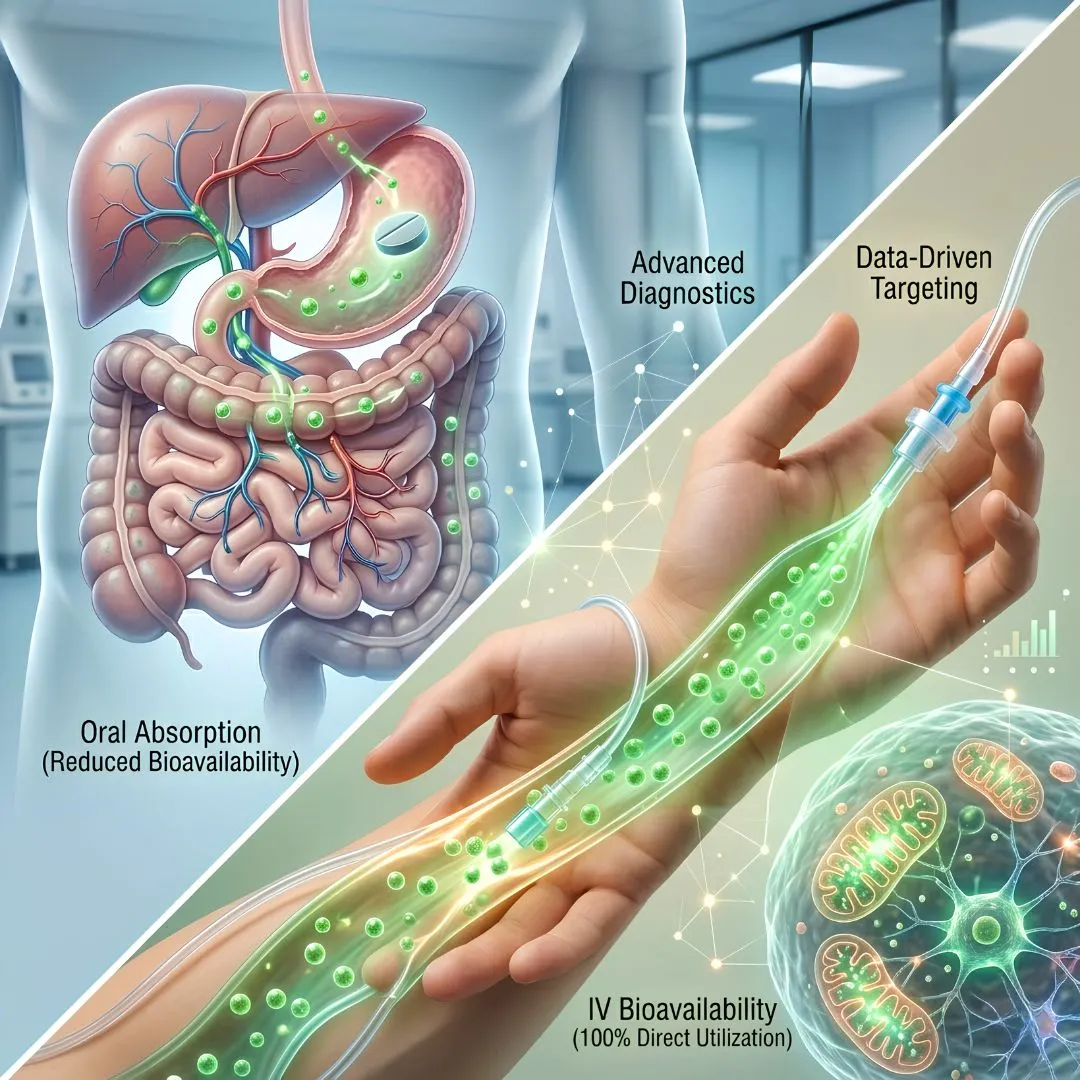
6. Bioavailability & Advanced Diagnostics
The Science: Maximizing the ROI of every treatment through superior delivery and data-driven targeting.
Concept: IV Bioavailability vs. Oral Absorption
Mechanism
IV delivery achieves 100% bioavailability by bypassing the digestive “first-pass” effect, ensuring immediate cellular utilization.
Clinical Evidence
ASAP IVs Review: Pharmacokinetics and benefits of direct intravenous nutrient delivery.
Why This Matters
Every protocol in our practice is selected based on its ability to target the biological “hallmarks of aging”—mitochondrial dysfunction, systemic inflammation, and cellular senescence. We don’t just treat symptoms; we provide your body with the specific signaling instructions it needs to repair and optimize itself.
DISCLAIMER: This library is for educational purposes only and reflects current research trends in the field of regenerative and functional medicine. These modalities and therapies are utilized in our clinical practice as supportive care and may not be FDA-approved for the specific treatment of disease. Please consult with our clinical team to discuss how these protocols may safely align with your personal medical history and longevity goals.
Join Our Wellness Community
Get root-cause wellness tips, seasonal health guidance, and first access to special offers and events, straight to your inbox. No fluff, no spam, just helpful insights to support your journey.
We respect your inbox. Unsubscribe anytime.
Licensed to Practice In
We are currently licensed to provide telehealth services in the states below. This list is subject to change as new licenses and compacts are added.
AK · AZ · CO · CT · DC · DE · HI · ID · IL · IA · KS · ME · MD · MA · MN · MT · NE · NV · NH · NM · NY · ND · OR · RI · SD · UT · VT · WA · WY

Menu
Services
Follow Us


© Copyright Essential Infusions Plus. All Rights Reserved.
Privacy Policy | Terms of Use